Written by Bennath Chilingworth
If there’s one thing we love to do here at REEF Scuba, it’s shining a light on underappreciated marine life and giving them the love they deserve.
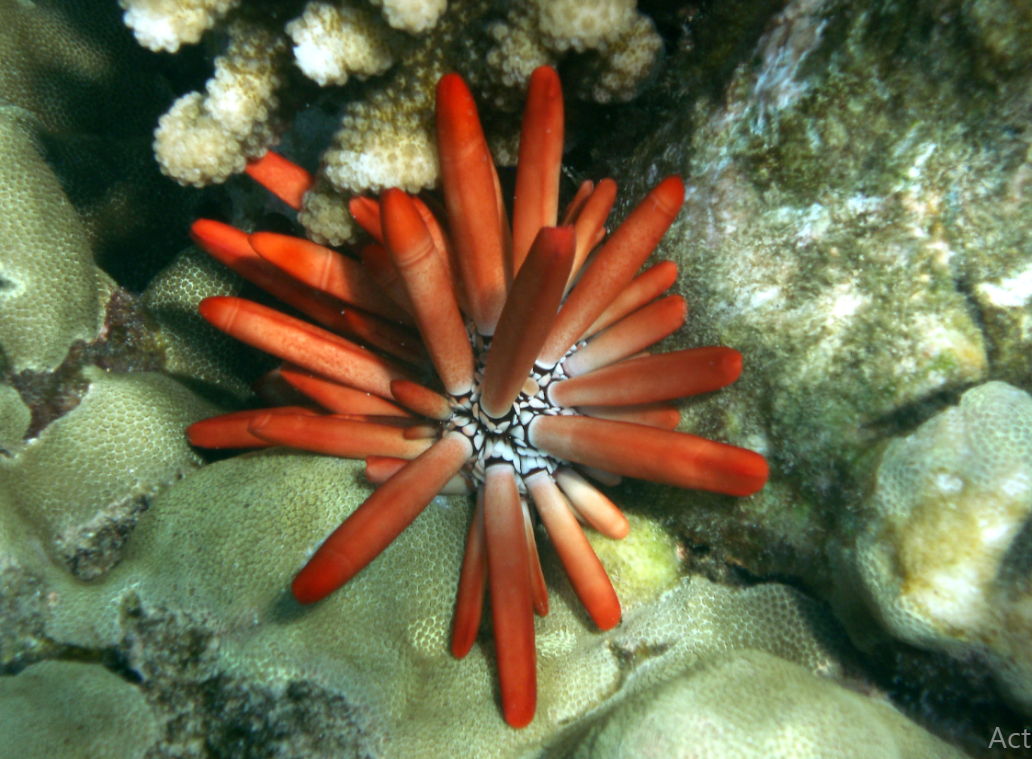
The Slate Pencil Urchin (Heterocentrotus mamillatus) is a unique and distinctive sea urchin found widely across the Indo-Pacific. As a nocturnal species, these urchins usually spend the day tucked away in rocks and crevices, using their spines to wedge themselves into hiding spots along the reef. Because of this, they’re likely to go unnoticed in the daytime, which is a shame given their striking individuality.
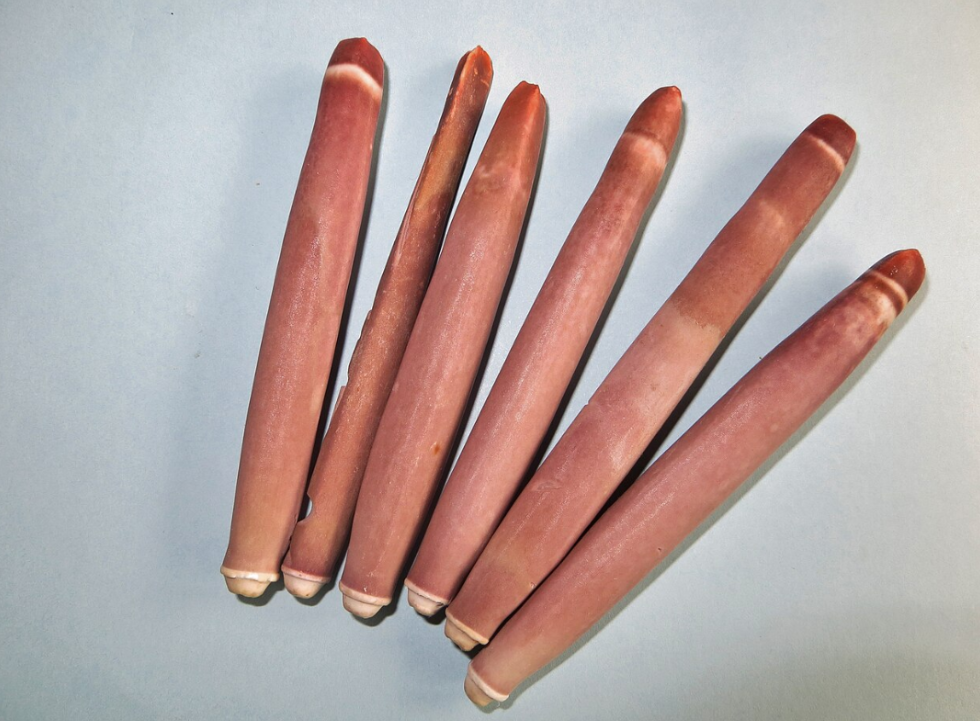
Their thick, blunt, bright red, and sometimes banded spines resemble old-school pencils (if they ever came in jumbo form). And the interesting part is, their name is more literal than you might think!
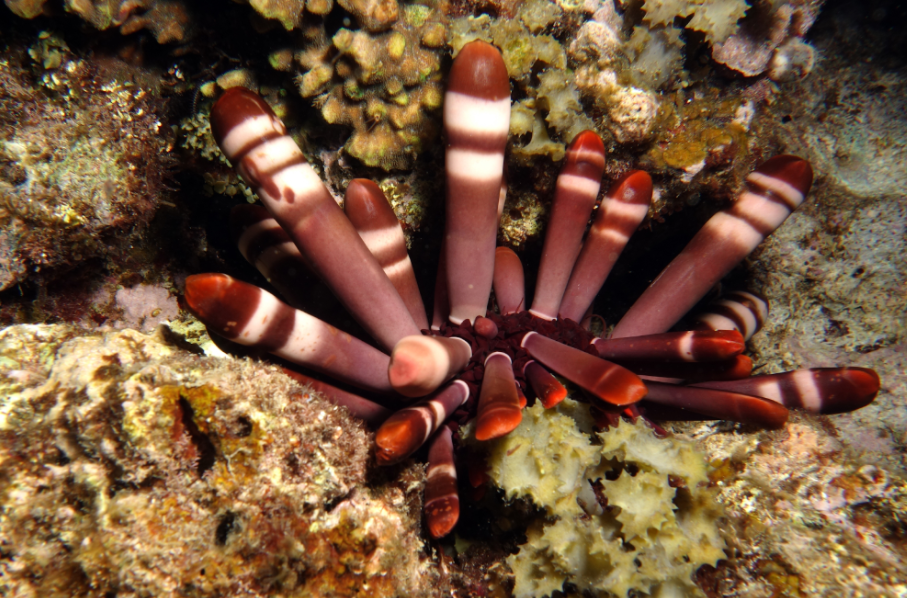
Historically, in the 18th and 19th centuries, the spines of the Slate Pencil Urchin were reportedly used as chalk in places like Hawaiʻi, where the species is especially abundant. Schoolchildren would use them to write on slate boards, with the tips being burned slightly beforehand to prevent scratching. So, yes…they really were used as pencils!
Sadly, sea urchins often get a bad reputation due to the urchin barrens that can form following the loss of their natural predators and other stressors such as marine heatwaves. On the west coast of the United States, for example, historical declines of sea otters due to hunting, combined with the more recent disappearance of sunflower stars due to wasting disease, led to a rapid increase in sea urchin populations. With nothing to keep their numbers in check, sea urchins grazed heavily on kelp forests, leaving behind desolate stretches of bare rock and dramatically altered the ecosystem as a consequence. Similar patterns have been observed in other regions, including parts of Norway, Tasmania, and eastern Australia. But urchin barrens are a symptom of ecosystem imbalance, not the cause.

Image source: https://oregonmarinereserves.com/2019/10/24/urchins/
In a healthy ecosystem, sea urchins play important ecological roles. Through their messy eating habits, sea urchins break kelp into tiny, manageable fragments that detritivores can feed on, recycling nutrients back into the ecosystem. They also provide refuge for tiny creatures living in-between their spines. In coral reef environments (which is where you’ll find our spectacular Slate Pencil Urchin), they graze on algae that might otherwise smother and suffocate corals, keeping the reef clean and healthy.
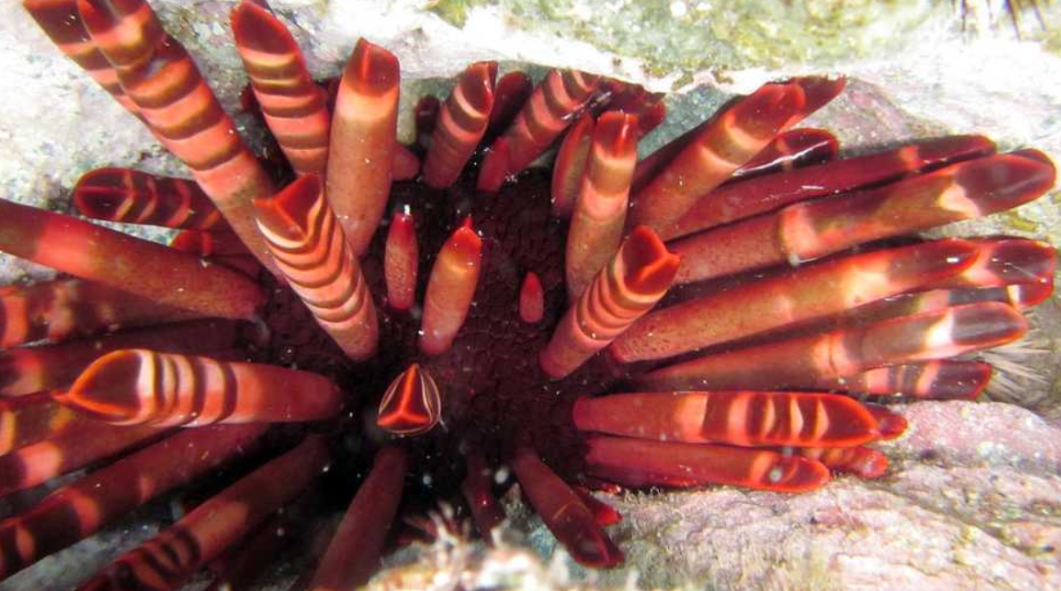
In summary, while urchin barrens are a real problem, we don’t like to blame the urchins themselves. They are ecosystem engineers, and the Slate Pencil Urchin is a particularly underrated one at that! Be sure to keep an eye out for one next time you’re exploring the reef, especially at night. And if you do see a Slate Pencil Urchin after dark, you might be surprised to find that its spines appear a soft pink rather than the bright red you’ll find them wearing during the day.
🐚 Want More Underappreciated Ocean Life?
The Slate Pencil Urchin is just one of the fascinating and overlooked species we spotlight in our REEF Scuba Newsletter. Each month, subscribers get deep dives into underappreciated ocean species, the science shaping how we understand and protect the ocean, cool ocean products, impactful ocean activities, and curated updates from the world of marine conservation and policy.
Subscribe to the REEF Scuba Newsletter here
You'll be in good company with the divers, ocean nerds, and curious minds who've already signed up, and you'll never look at a reef the same way again.