What Does an Octopus Have to Do with Autism?
Written by Bennath Chillingworth
Octopuses are extraordinary animals, admired by many for their intelligence, unique physiology, and fascinating behaviours. Public appreciation has continued to grow in recent years, and perceptions have shifted away from seeing them as strange, alien-like creatures that are difficult to understand.
Instead, they are becoming increasingly recognised as curious, perceptive, and sentient animals that are worthy of understanding on their own terms. In fact, there is increasing ethical pressure globally to ban research practices that inflict pain or distress on octopuses due to their sentience.
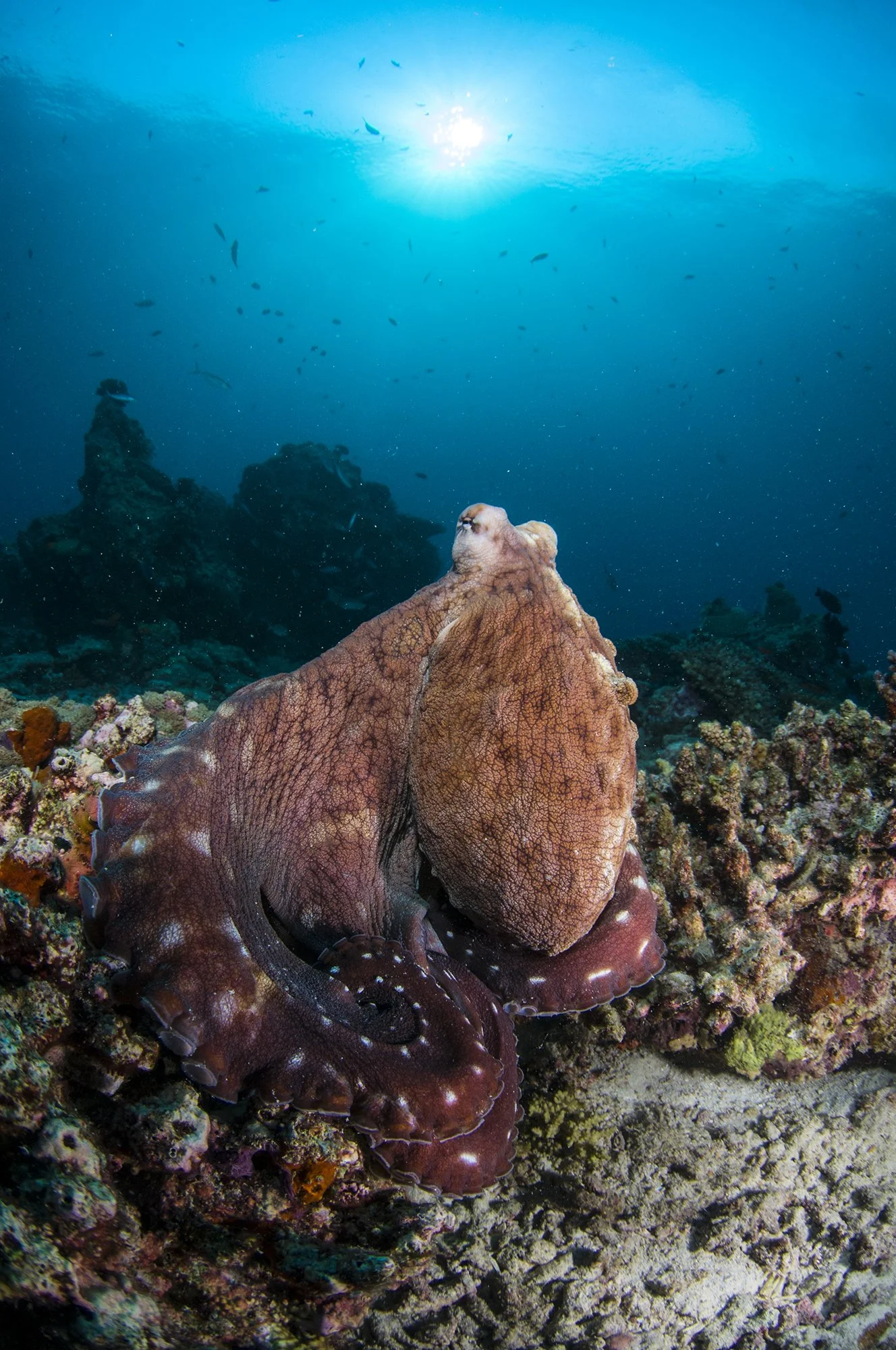
Photography by: Umeed Mistry / Ocean Image Bank
The neurodivergent community in particular, are especially drawn to the octopus, which has led to its emergence as an unofficial symbol for autism.
Importantly, this was not imposed by external organisations, unlike the puzzle piece symbol which was popularised by the U.S. non-profit Autism Speaks, and remains somewhat controversial. Some associate the puzzle piece with negative connotations, feeling that it implies incompleteness, that they are a “puzzle to be solved”, or perhaps exerts pressure to fit in with the wider puzzle (i.e. society). This framing suggests something is wrong or “missing”, rather than recognising autism as a different yet valid way of thinking.
Instead, the octopus serves as a positive alternative, having developed organically from autistic creators, artists and the community itself, rather than being assigned to them. This gives the symbol a deeper sense of meaning and authenticity, and perhaps another reason to appreciate these remarkable creatures all the more.
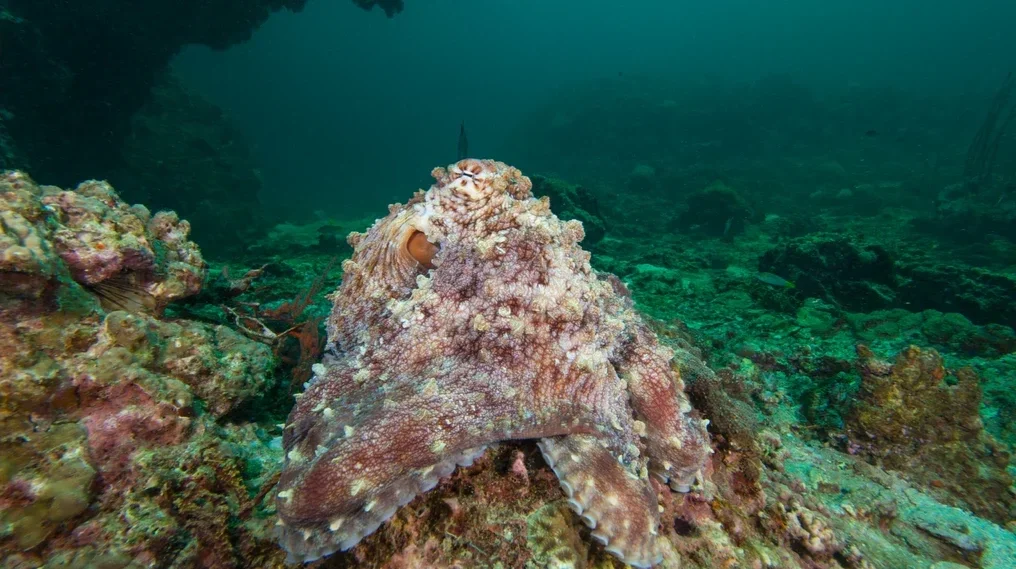
Image source: Can Octopuses Change Color? Discover Their Amazing Superpower! By Emily Kline at https://becausetees.com/
So, what is it about the octopus that resonates so strongly?
Let’s take a closer look, with some slightly scientific explanations.
Unique Forms of Intelligence and Deep Sensory Processing
As we know, octopuses are highly intelligent, but in a way that’s very different from most other animals.
When we think of “intelligent” life, we often default to humans, dogs, chimpanzees, dolphins, and elephants for example. But what do all these animals have in common?
Firstly, they are vertebrates, which means they have a backbone and a centralised nervous system — where the brain and spinal cord act as the main control centre.
An octopus’s nervous system, on the other hand, is organised very differently.
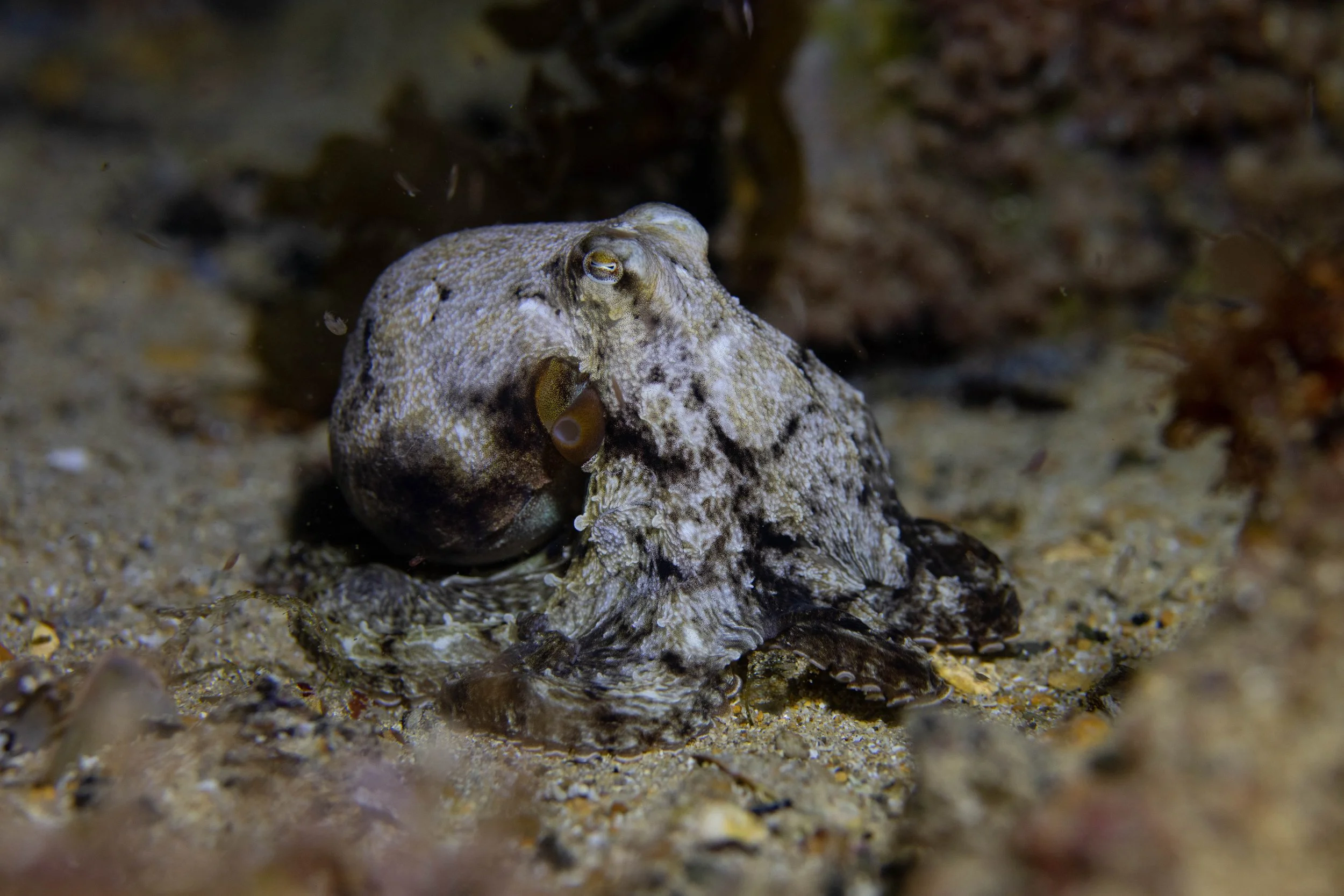
Photography by: Stefan Andrews / Ocean Image Bank
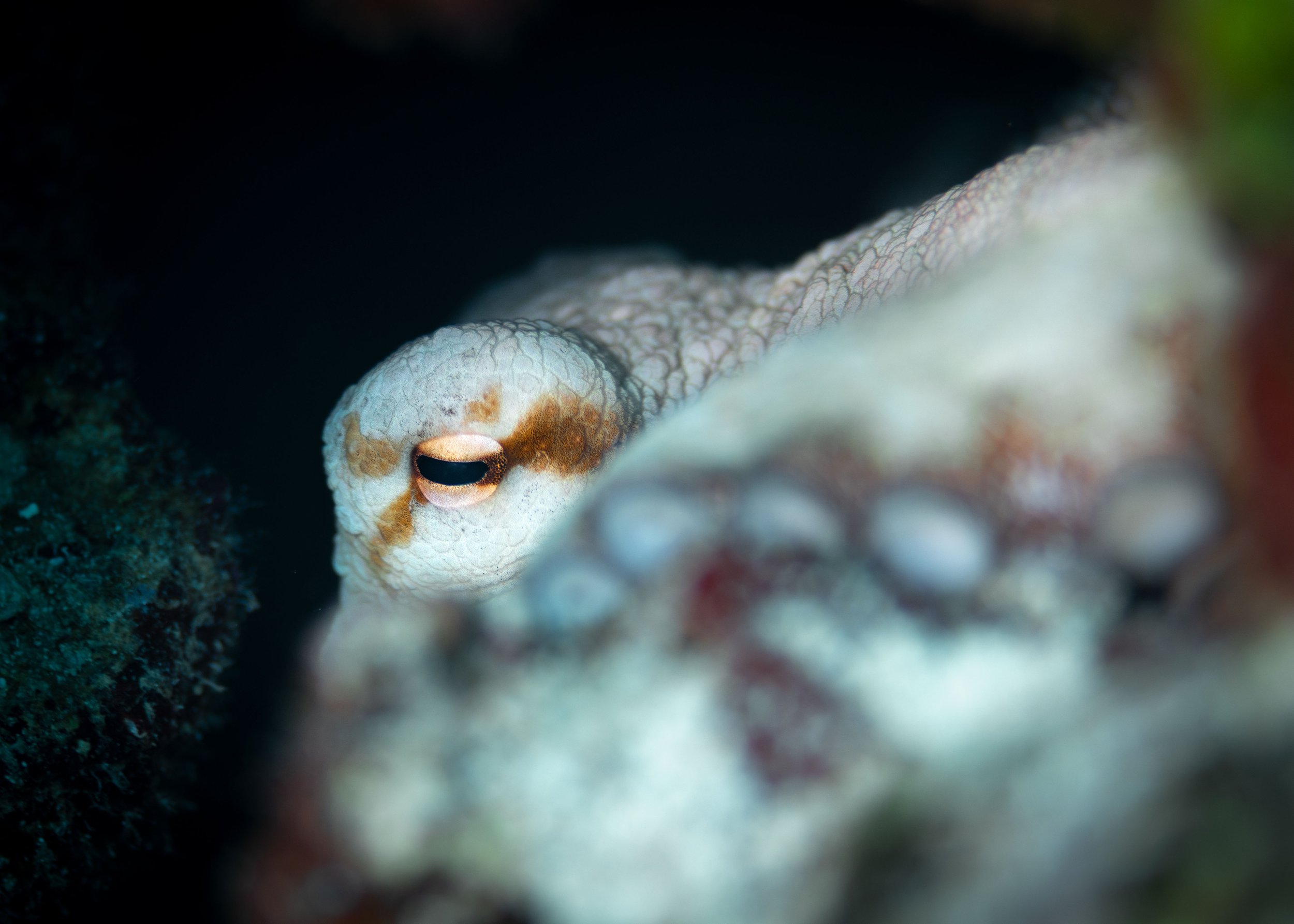
You may have heard that octopuses have “nine brains”. While not literally true, there is a reason for this phrase. Octopuses have around 500 million neurons, which is comparable to that of a dog. About a third of these neurons are located in the “main” brain, which sits in the head and (fun fact alert) is uniquely shaped like a donut encircling the oesophagus! The remaining two-thirds are distributed throughout their eight arms…
This means that each arm essentially functions as a “mini brain” and is able to process sensory information, as well as taste, feel, and even detect light. Each arm can also act independently, although the central brain can override this and coordinate the arms for complex tasks when needed.
The decentralised nervous system of an octopus therefore represents cognition throughout the entire body. This reflects a sensory-rich way of experiencing the world, which many autistic people can often relate to, often with heightened sensitivity to sounds, textures, light, and environments.
Photography by: Connor Holland / Ocean Image Bank
Secondly, in our earlier examples of intelligent life, you may have noticed that these animals (humans, dogs, chimps etc.) are typically social creatures, living and travelling in groups such as troops, packs, herds, or pods. The social brain hypothesis suggests that intelligence evolved in response to the cognitive demands of social life, such as managing relationships and interpreting behaviour, rather than simply finding food or navigating the physical environment.
But the octopus challenges this idea.
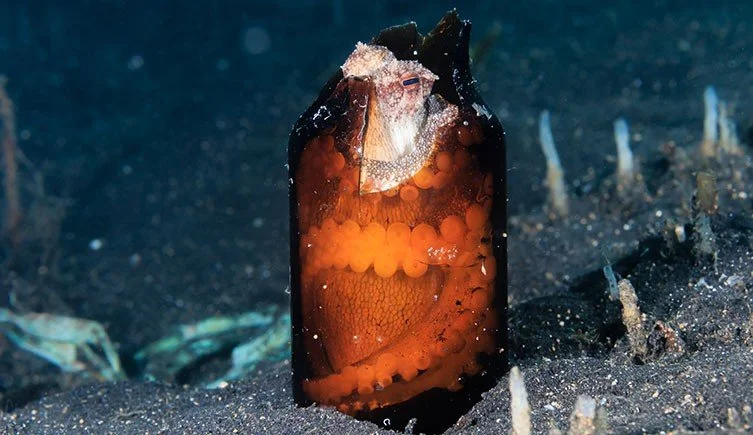
Octopuses are largely solitary animals, hardly ever seen together unless they are mating. Some might even describe them as antisocial, hiding in dens and generally avoiding others. There are two slight exceptions known as “Octopolis” and “Octlantis”. These are informal names for two congregations of octopus dens or “octopus cities” that were discovered in 2012 and 2017 respectively, in Jervis Bay, Australia. But even with only 15 residents, social interaction between individuals is not exactly affable, with frequent aggression, chases, and den-evictions observed among the octopuses living in Octlantis. The benefits of living in densely populated areas like this remains uncertain, but it may be a case of necessity, with limited den space in an otherwise flat and featureless area.
Despite the lonesome nature of an octopus, their intelligence is undeniable. They are capable of solving problems, using tools, and even recognising humans. Similarly, autism is characterised by a difficulty with social interaction or a preference for solitude, yet is also associated with an intense focus on specific interests and creative ways of thinking.
Photography by: Richard Whitcombe/ Shutterstock
Clearly, the intelligence of the octopus has evolved along a very different path to other animals. Indeed, many invertebrates rely on shells or exoskeletons for protection, but the octopus lost its shell over 140 million years ago! Although this enables it to squeeze into impossibly tight spaces, the absence of a protective shell renders the octopus more vulnerable to predators. Instead, it has relied on the evolution of superior intelligence to survive, without conforming to social networks. This is a powerful metaphor showing that intelligence can exist outside typical expectations, something that resonates with the neurodivergent community.
Adaptability and Masking
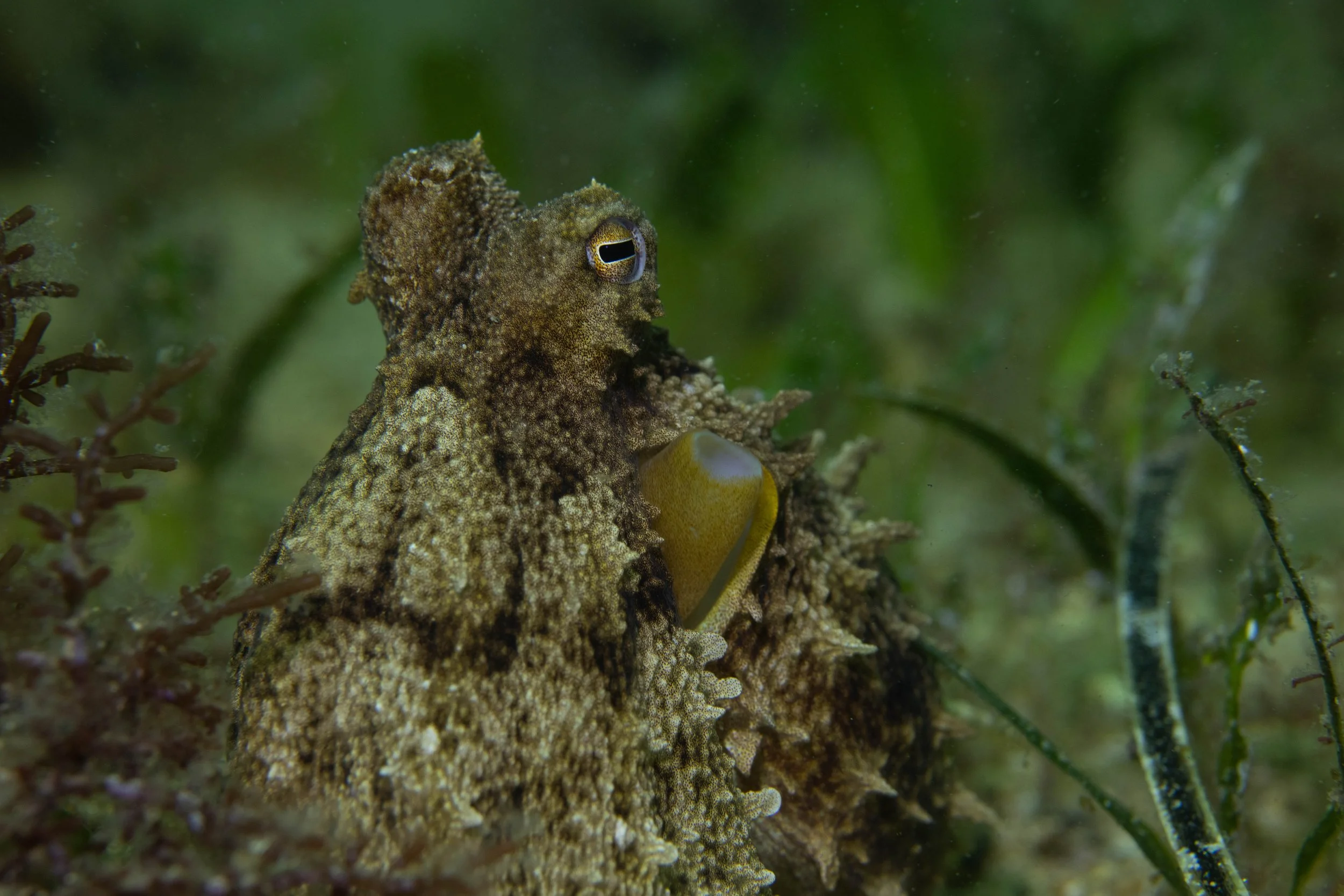
Another adaptation the octopus evolved in place of a protective shell is its remarkable ability to camouflage itself. Often described as “masters of disguise,” octopuses can rapidly change both colour and texture to blend in seamlessly with their surroundings.
Photography by: Stefan Andrews / Ocean Image Bank
Many autistic people relate to this ability through a behaviour known as masking. This involves observing and adopting certain behaviours, expressions, or communication styles in order to fit into social environments. It can help someone navigate unfamiliar situations or avoid standing out, but it can also be exhausting, and often comes at a personal cost.
If you’re anything like us, you might be wondering: how exactly does an octopus camouflage itself?
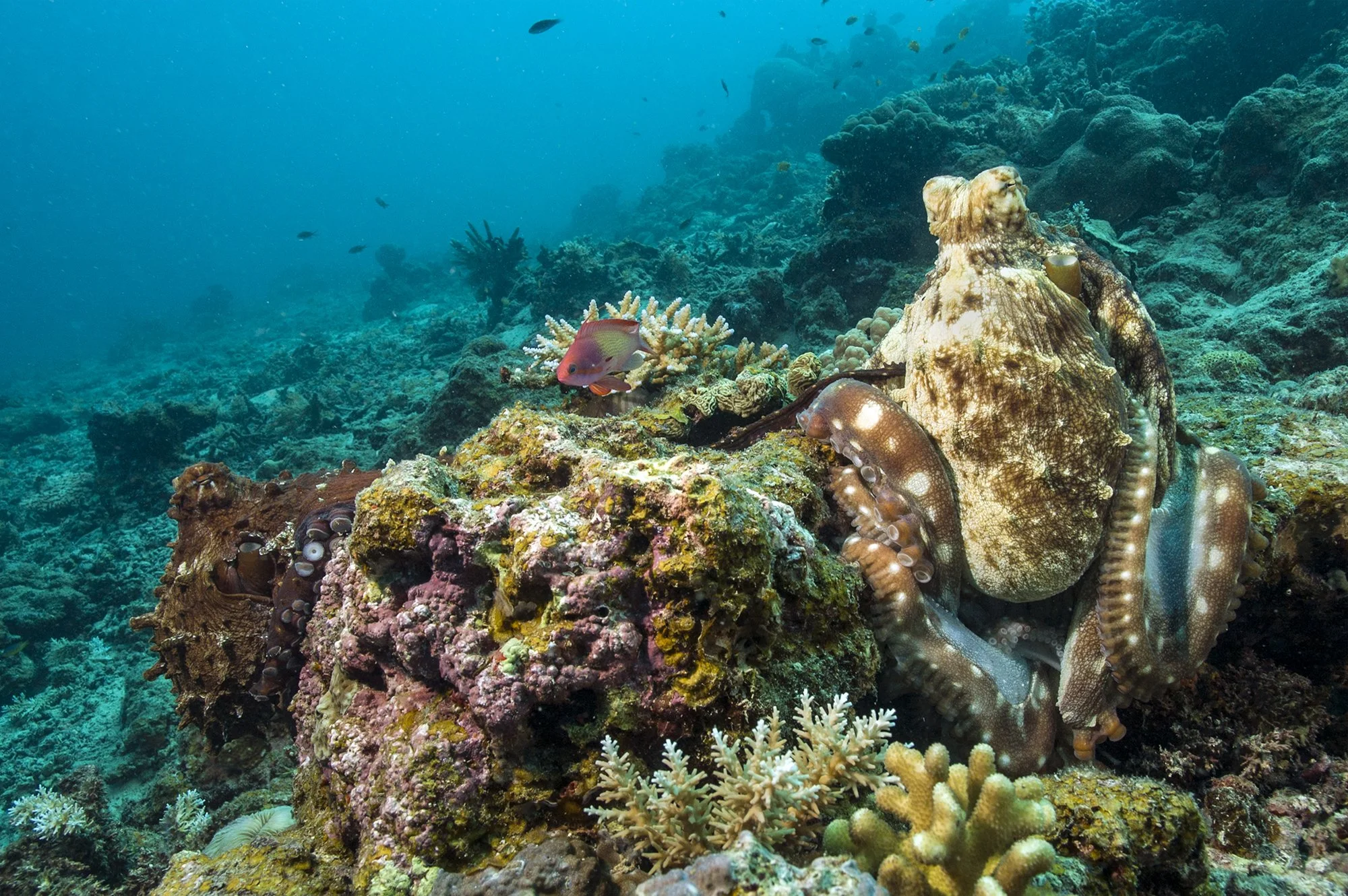
Well, we’ve got you covered! This ability is known scientifically as crypsis. To understand how it works, let’s start with texture. The skin of an octopus is covered in tiny bumps called papillae, which can be relaxed to make the skin appear smooth, or raised to create ridges and a rough, uneven surface. This allows the octopus to mimic the texture of its surrounding environment. Pretty impressive, right?
Photography by: Umeed Mistry / Ocean Image Bank
Colour change is even more fascinating, and to explain this process, we’d like to introduce you to the word chromatophore. This is a special type of skin cell that is filled with pigment sacs, each surrounded by muscle cells. When the muscles contract, they stretch out the pigment sac, blowing it up like a balloon and flooding the chromatophore with colour. When the muscles relax, the pigment sac shrinks back to a tiny dot, making the colour less visible.
The muscles controlling each chromatophore are linked directly to the octopus’s nervous system, which, as we know, extends throughout much of its body. This allows colour changes to happen in less than a second. There are roughly 230 chromatophores in just one square millimetre of skin, enabling an dazzling range of colour displays. But even then, chromatophores are not the only cells at work…
Best friends to the chromatophores are the iridophores and leucophores. Iridophores are another type of skin cell, located just beneath the chromatophores that contain a protein called reflectin. This protein reflects light, creating shimmering, iridescent, almost metallic colours.
Leucophores form a deeper layer of skin cells and work slightly differently. Instead of reflecting light, they scatter it, producing white tones that help control brightness and contrast. Together, these layers allow the octopus to create the complex, mottled patterns needed to blend into coral, rocks, or sand.
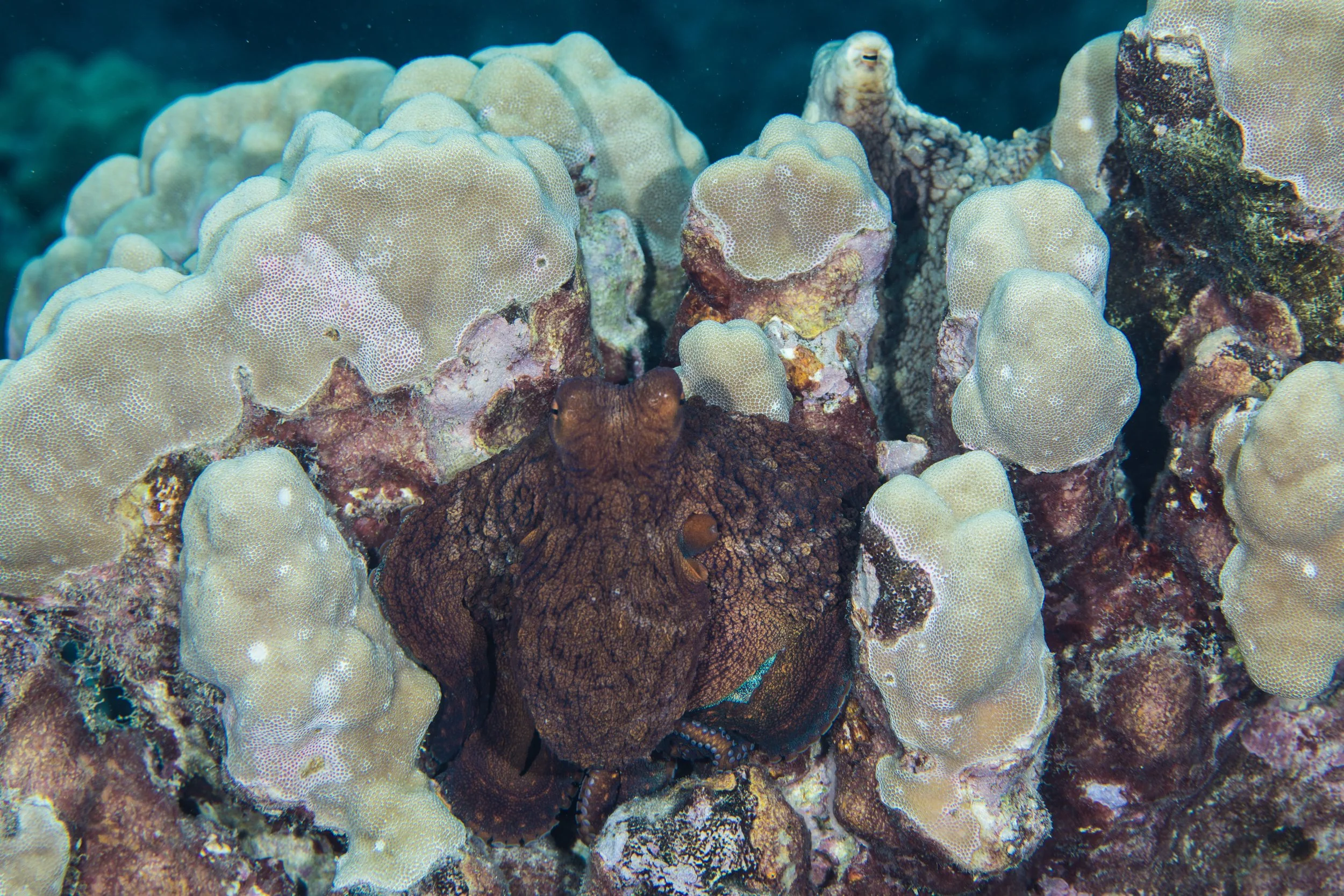
Photography by: Kimberly Jeffries / Ocean Image Bank
As we mentioned earlier, this ability to camouflage does not come for free. In fact, a recent study published in 2024 found that crypsis is very metabolically expensive, meaning it requires significant amounts of energy. This is unsurprising, given that the process is controlled by both muscles and the nervous system. It serves as another powerful metaphor for the autistic experience, highlighting the often unseen costs of trying to fit into one’s surroundings.
We might expect octopuses to evolve ways of reducing their need to rely on crypsis, given it’s high energy demands…and indeed they have. Many species adopt behaviours such as using dens for shelter or being more active at night when they are less visible to predators. There are clear parallels here with some of the strategies autistic people use to navigate overwhelming social situations, such as seeking out quieter environments or limiting exposure to highly stimulating settings.
Interestingly, when the need for camouflage is reduced, the trait itself can also diminish. In deep-sea environments, where visual predation is much lower, some octopus species show a reduction in chromatophores. This reflects a broader pattern in evolution: when a trait is no longer essential, the pressure to maintain it decreases.
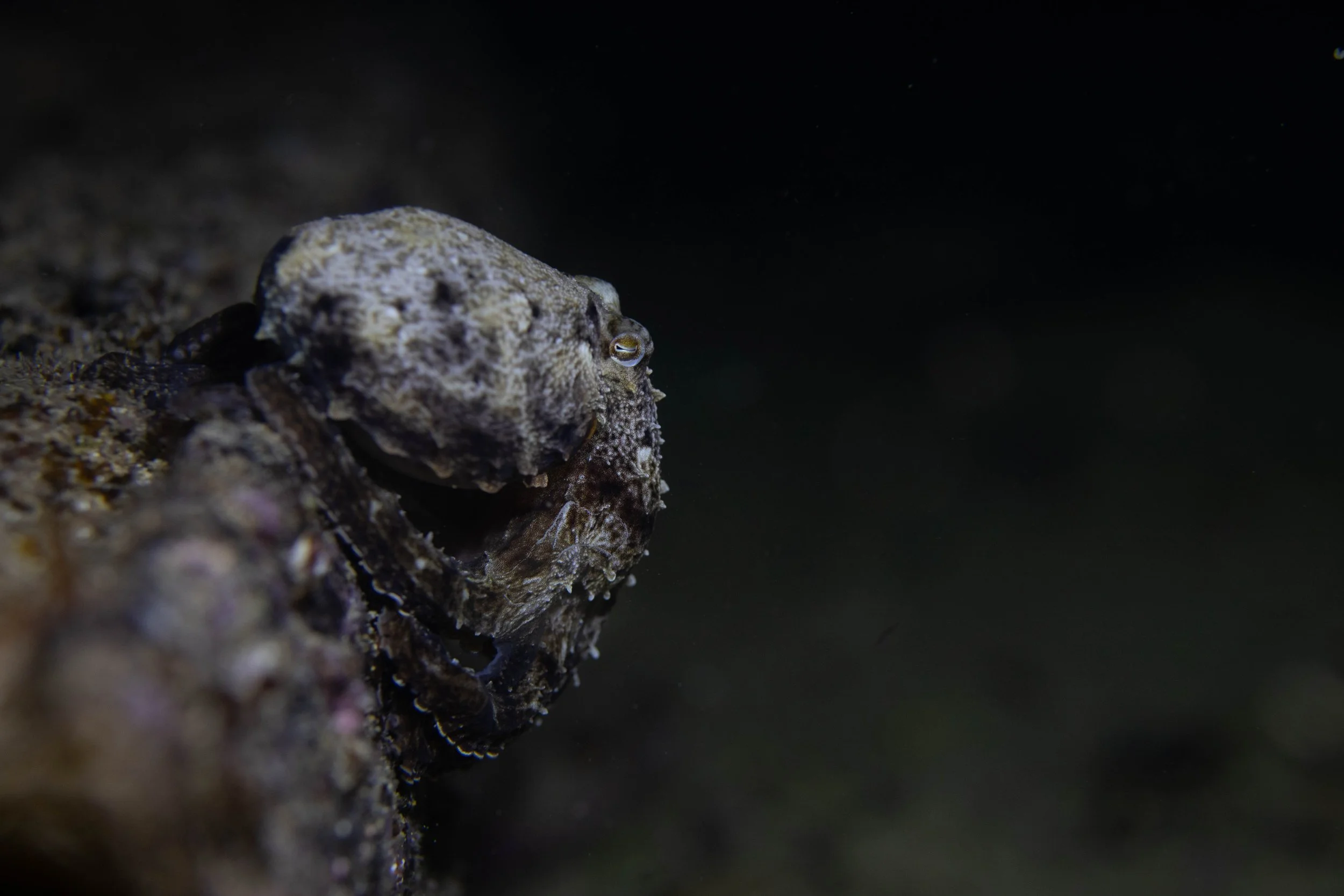
Photography by: Stefan Andrews / Ocean Image Bank
So, what can we take from all of this? The octopus is more than just a fascinating animal; it offers a powerful way of rethinking how we understand intelligence and behaviour. From its decentralised nervous system to its remarkable adaptability, the octopus shows us that there is no “right” way to think, behave, or exist.
It’s perhaps no surprise, then, that so many autistic people have found meaning in this creature. Not because the octopus is a perfect comparison, but because it symbolises that difference is not something to be fixed, but something to be respected and celebrated.